
What Are Stock Perpetual Futures?
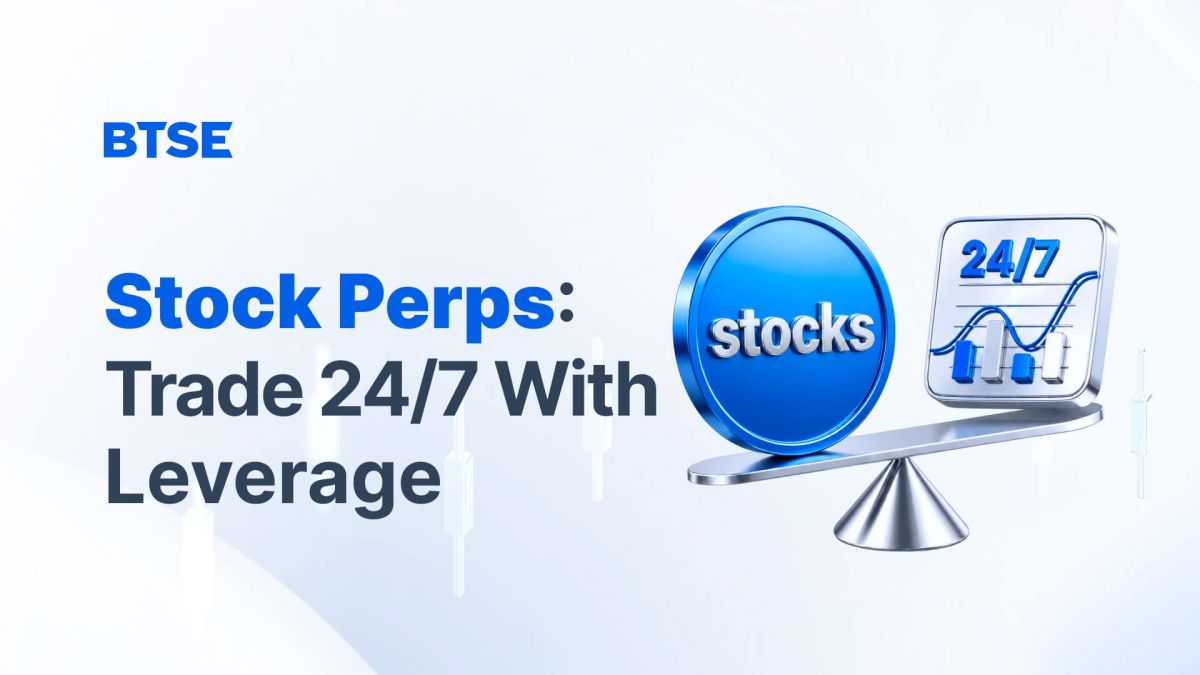
Stock perpetual futures are contracts that let you trade a stock’s price movement with leverage, 24/7, without ever owning the share. You go long or short on where the price is headed, and the position never expires; you hold it as long as your margin covers the funding payment (BTSE: Perpetual Contracts).
For a trader based in Taipei, Singapore, or Manila, that opener matters more than it sounds. U.S. markets run roughly 9:30 p.m. to 4 a.m. in those time zones, which for him is the middle of the night.
Opening a brokerage account with a U.S. or Korean broker as a non-resident is its own project, and once it’s open, moving money in usually means a wire transfer, a currency conversion, and a multi-day wait.
Stock perps skip all three: fund with a stablecoin you already hold, trade the position the moment the news breaks, whenever that happens to be, and manage it from the same account you use for crypto.
Perps on Stocks, Is That a Thing?
Yes, and if the phrase sounds unfamiliar, that’s just because “perps” spent their first several years as a crypto-only term.
The mechanism works directly: a perpetual futures contract tracks an underlying asset’s price through a funding rate, a small payment exchanged between long and short position holders on a regular schedule (every 8 hours on BTSE) (BTSE: Funding Fees).
When the contract trades above the real stock price, longs pay shorts; when it trades below, shorts pay longs. That constant back-and-forth is what keeps a contract with no expiry date anchored to a real-world price it never actually settles against.
Applied to a stock, index, or commodity instead of a cryptocurrency, nothing about that mechanism changes; the contract just tracks TSLA or gold instead of BTC.
Stock Perps vs. Tokenized Stocks vs. CFDs vs. Options
These four products all promise “trade a stock without a brokerage account,” but they work in meaningfully different ways:
Stock Perps |
Tokenized Stocks |
CFDs |
Options |
|
|---|---|---|---|---|
What you hold |
A derivative contract tracking price |
Depends on issuer; some are backed by real shares held in custody, some aren’t |
A derivative contract tracking price |
A contract giving the right (not obligation) to buy/sell at a set price |
Expiry |
None |
None (if backed 1:1, behaves like the share itself) |
Typically none for major CFD providers |
Fixed expiration date |
Ownership rights (dividends, voting) |
No |
Sometimes, if fully share-backed |
No |
No |
Funding mechanism |
Periodic funding rate |
None if share-backed; varies otherwise |
Overnight financing charge |
Premium paid upfront |
Where it trades |
24/7 on the exchange offering it |
Varies by issuer/platform |
Typically follows underlying market hours; some providers extend hours |
Follows underlying exchange hours |
Leverage |
Yes, exchange-set limit |
Typically no, unless combined with margin separately |
Yes |
Built into the structure (via premium) |
The question people actually mean to ask here is: “are tokenized stocks backed by real shares?”, and the honest answer is: it depends entirely on the specific product and issuer, since some tokenized-equity platforms hold real shares in custody 1:1 and others don’t.
Stock perps sidestep that question entirely, because there’s no claim to an underlying share to begin with, it’s a price-tracking contract, full stop, which is a different trade-off than tokenized stocks, not a better or worse one on every dimension.
Can I Trade Stocks, Indices, Metals and Commodities From One Platform, 24/7?
Yes. On BTSE, stock perps, a gold perpetual, and crypto perpetuals all sit in the same futures wallet, funded and settled in USDT or another stablecoin (BTSE: Stock and Gold Perpetual Futures Are Now Available).
You’re not opening a separate brokerage account for equities, a separate commodities account for gold, and a separate exchange account for crypto, one wallet, one margin balance, one 24/7 market across all three asset classes.
That matters most for the exact moments markets don’t cooperate with your schedule: a Fed rate decision dropping at 2 p.m. ET while you’re asleep in Taipei, a Korean chipmaker’s earnings landing after the KOSPI has already closed for the day, gold spiking on a geopolitical headline over a weekend.
A single cross-asset account means reacting to any of those doesn’t require deciding which of three separate logins to open first.
How Leverage, Margin and Liquidation Work on Stock Perps
Leverage lets you open a position larger than your deposited margin by borrowing the difference from the exchange (BTSE: Leverage).
Stock perps on BTSE go up to 50x, a separate, lower cap than the leverage available on major crypto pairs like BTC or ETH, which matters if you’re used to thinking in crypto-leverage terms and carrying that assumption over to a stock position.
The trade-off leverage creates is simple to state and easy to underestimate in practice: the higher the multiplier, the smaller the adverse price move needed to wipe out your margin and trigger liquidation. Here’s what that looks like at three different leverage levels, using a hypothetical $1,000 margin deposit on a $100 stock, in isolated margin mode:
Leverage |
Position size controlled |
Approximate adverse move to liquidation* |
|---|---|---|
5x |
$5,000 |
~20% |
20x |
$20,000 |
~5% |
50x |
$50,000 |
~2% |
*This is a simplified illustration of the relationship between leverage and liquidation distance (roughly 1 ÷ leverage), not an exact figure, actual liquidation price also depends on the maintenance margin requirement and any fees or funding accrued, both of which narrow the buffer slightly further in practice.
The practical reading of that table: at 5x, a stock would need to move a full fifth against you before liquidation, the kind of move that typically takes a real catalyst (an earnings miss, a guidance cut). At 50x, a move that size happens inside a single volatile trading session, sometimes inside a single hour around a news event.
Margin mode matters just as much as leverage here.
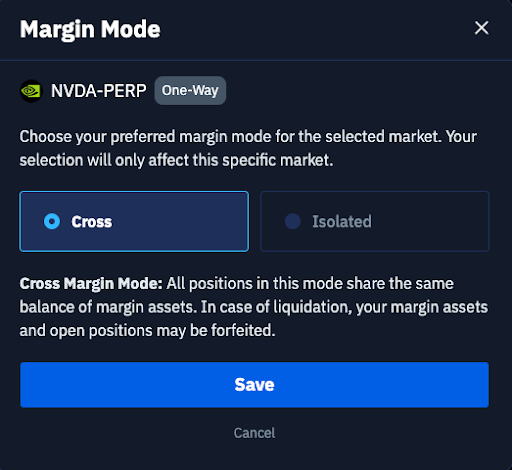
Isolated margin mode ring-fences each position with its own dedicated collateral, capping your maximum loss on any one trade at the amount you assigned to it, a loss there stays contained to that position.
Cross margin mode works differently, and more aggressively, than it might sound: all your open positions (crypto, stock, and commodity alike) share a single unified margin pool.
If your account’s overall margin ratio drops below the maintenance threshold, BTSE’s liquidation engine closes all open positions at once, not just the one that triggered it (BTSE: Introduction to Stock & Commodity Perps on BTSE, FAQ #3; BTSE: Liquidation and Partial Liquidation).
A losing stock perp position can force liquidation of unrelated crypto or commodity positions sitting in the same cross-margin pool, even ones that were profitable moments earlier. Cross margin improves capital efficiency by letting gains on one position offset margin pressure on another, but it also means risk isn’t isolated to the trade that caused it.
Neither leverage level nor margin mode is inherently the “right” one; it’s a function of how confident you are in the timing of a move, how much of a swing you can tolerate being wrong about, and whether you want a loss on one position to have any chance of dragging down the others. Sizing down as leverage goes up isn’t a suggestion so much as the math working exactly as designed.
Funding Rates on Stock Perps: What Happens Overnight and on Weekends
A stock perp’s funding payment triggers every 8 hours, on a fixed schedule, regardless of whether the underlying stock exchange happens to be open at that moment (BTSE: Funding Fees). That’s a deliberate design choice, not an oversight: since the entire point of a stock perp is trading around the clock, the mechanism that keeps its price anchored to reality has to keep running around the clock too.
While Nasdaq, the KOSPI, or the HKEX are closed, BTSE’s market makers continue providing liquidity on the perp contract itself, so the contract keeps trading and price-discovering even without a live reference market feeding it in real time (BTSE: Stock Perps on BTSE, The 10 Questions Traders Ask Most).
Liquidity on some names can thin outside the underlying market’s usual hours, but the order stays fillable; you’re not locked out of managing a position just because the exchange the stock is listed on happens to be shut.
One mechanic worth understanding specifically: dividends. Since a stock perp gives you price exposure without ownership, you don’t receive a dividend payment directly, but the expected price impact of an upcoming dividend gets built into the contract’s pricing and funding rate, so the economic effect of the payout is still reflected in the numbers even without a check landing in your account.
It’s a subtler version of the same core idea behind funding generally: the contract doesn’t own the asset, so every real-world economic fact about that asset (the closing bell, a dividend date, an earnings release timed for after hours) has to be represented synthetically through price and funding rather than through direct ownership.
Which Stocks Can You Trade as Perps?
BTSE’s stock and commodity perp catalog has grown quickly since launch, and new listings are added regularly; this list reflects what’s confirmed live as of this pillar’s publish date. Check the futures markets page for the current full roster.
- NVIDIA (NVDA), AMD, Meta (META), Palantir (PLTR), Marvell (MRVL), AI stocks roundup
- Applied Materials (AMAT)
- Arm Holdings (ARM), Broadcom (AVGO)
- Cerebras Systems (CBRS)
- CoreWeave (CRWV)
- Marvell (MRVL), second dedicated spoke, Marvell/XLE/BlackBerry
- Zhipu
- MiniMax
Enterprise AI & Cybersecurity
- CrowdStrike (CRWD
- IBM, Nebius (NBIS), ServiceNow (NOW)
- BlackBerry (BBX)
Asian Stock Perps: Korea, Japan & Taiwan
- SK Hynix (SKHY)
- Hyundai Motor (HYUNDAI)
- Samsung Electronics (SAMSUNG)
- Kioxia (KIOXIA)
- Brazil ETF (EWZ)
- Sprott Uranium Miners ETF (URNM)
- Energy Select Sector SPDR ETF (XLE)
- Nasdaq-100 (QQQ), S&P 500 (SPY)
- Semiconductor Bull 3x (SOXL)
Pre-IPO & Private Company Perps
Gold & Commodity Perps
- Gold (GOLD-PERP), Silver (SILVER-PERP)
- Crude Oil (OIL-PERP), Natural Gas (GAS-PERP)
Biotech & Healthcare
Also Available
- Apple (AAPL)
- Netflix (NFLX)
- USA Rare Earth (USAR)
- Rocket Lab (RKLB)
- Tesla (TSLA), Coinbase (COIN), Amazon (AMZN), Robinhood (HOOD), Circle (CRCL), Google (GOOGL), part of the original launch lineup
How to Place Your First Stock Perp Trade
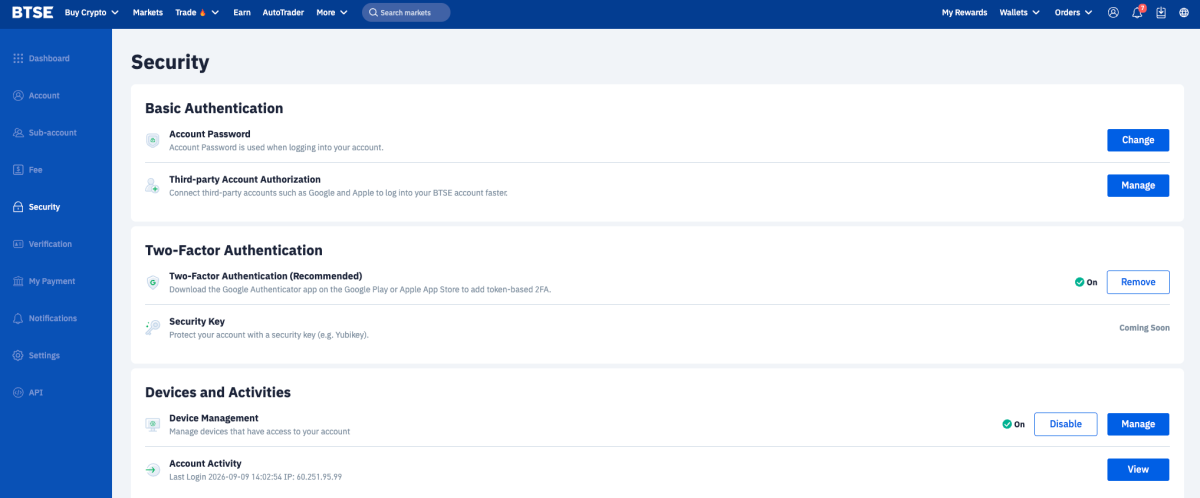
Step 1: Create and verify your account. Register a BTSE account and complete identity verification (KYC). This is a one-time step; once verified, it covers every product on the platform, not just stock perps.
Step 2: Deposit funds. Deposit crypto or a stablecoin like USDT into your BTSE account. No fiat wire transfer or brokerage onboarding required; if you already hold crypto, you can be funded in minutes.
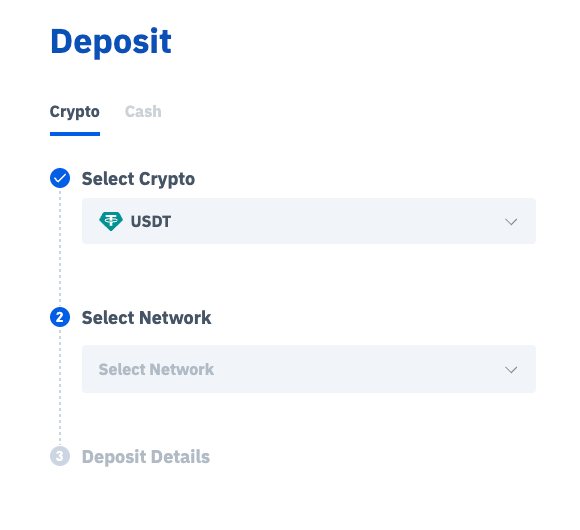
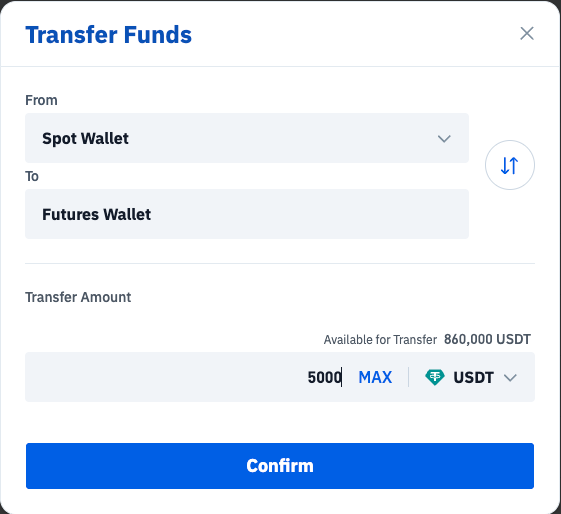
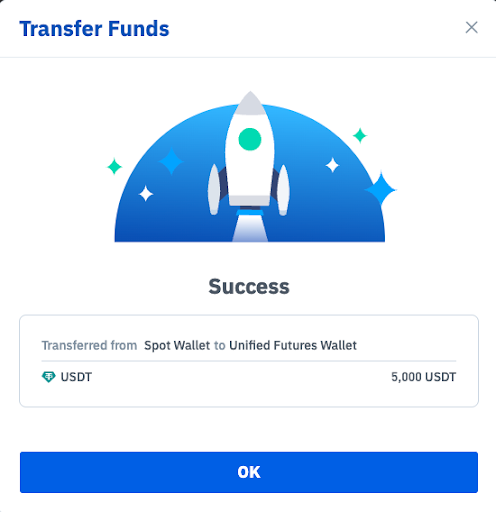
Step 3: Transfer funds to your futures wallet. This step trips people up if they skip it: BTSE keeps spot and futures balances in separate wallets, and transfers between them are always manual; they don’t happen automatically just because you deposited (BTSE: How to Trade Commodity Perpetuals Natively Using Your Crypto Portfolio). Go to your wallet overview and move the amount you want to trade with from Spot to Futures.
Step 4: Choose your margin mode. Before opening a position, decide between Cross Margin (all positions share one collateral pool, more capital-efficient, but a loss on one position can trigger liquidation across all of them) and Isolated Margin (each position’s risk is capped to the margin you assign it individually). This choice matters more than it looks like a checkbox should; see the leverage section above for exactly what each mode does at liquidation.
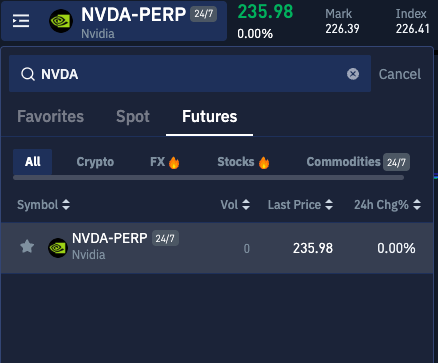
Step 5: Find your contract. Go to the Futures/Markets section and search for the stock perp you want, for example, TSLA-PERP or AAPL-PERP. BTSE’s All-in-One Orderbook consolidates liquidity, so you see depth across the market in one place rather than a fragmented view.
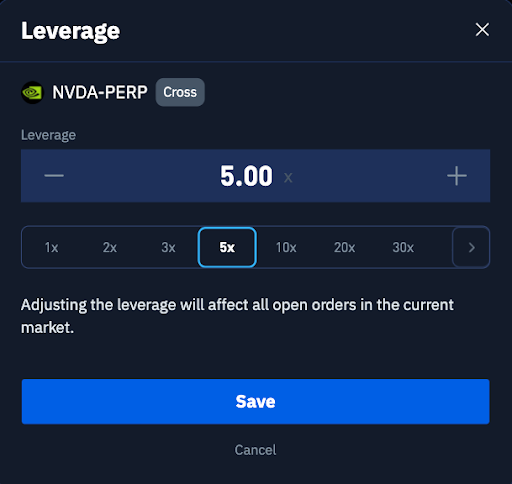
Step 6: Set your leverage. Choose a leverage multiplier for this specific position, up to 50x on stock perps. Higher leverage means a smaller adverse price move triggers liquidation, so this is the moment to apply the sizing logic from above rather than defaulting to the highest number available.
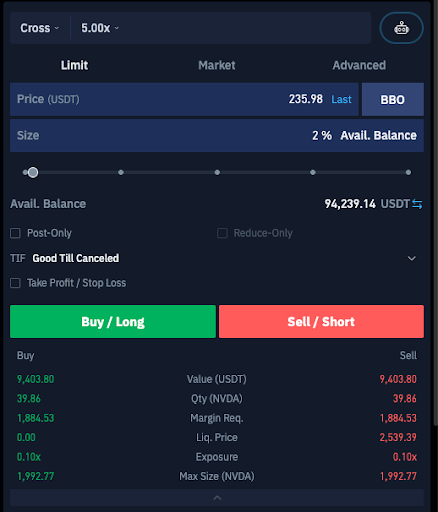
Step 7: Choose long or short, and set your position size. Long if you expect the price to rise, short if you expect it to fall. As you set your size, the interface will show your estimated liquidation price; check that it’s a distance you’re actually comfortable with before confirming. Optional but worth doing on a first trade: set a stop-loss and take-profit at the same time, so your exit is decided before emotions get involved.
Step 8: Place the order and monitor your position. Once submitted, your position appears in your open positions list with real-time unrealized P&L. From here you can track the funding rate being charged or paid, adjust your stop-loss, add margin, or close the position manually whenever you’re ready.

That’s the same basic flow whether you’re opening a $50 test position or a fully sized trade; the mechanics don’t change, only the numbers do.
Risks Specific to Stock Perps
Everything covered in the leverage section above – sizing, liquidation distance – applies to any leveraged perpetual contract, crypto or stock. Trading a stock as a perp adds a second layer of risk that’s specific to the fact that a real, listed equity sits underneath the contract, with its own market structure and its own events.
Earnings gaps. A stock perp trades 24/7, but that doesn’t mean price moves happen smoothly. Earnings are usually released before the market opens or after it closes, and a surprise beat or miss can move a stock 10–20%+ in the minutes after release, the kind of gap that can blow straight through a stop-loss order rather than letting it fill at the intended price, especially at higher leverage where the buffer to liquidation is already thin.
CrowdStrike’s ~20% single-day move on its August 2026 earnings beat (BTSE: CrowdStrike (CRWD) Perpetual Futures) and Moderna’s 177% single-session spike on trial data (BTSE: Trade MRNA Perpetual Futures) are both real examples of exactly this kind of gap risk.
Trading halts on the underlying. Listed exchanges pause trading in a stock for a range of reasons: volatility circuit breakers, pending material news, regulatory halts. A stock perp, by contrast, is designed to keep trading through all of that. That’s the entire value proposition, but it also means the perp’s price and the real market’s price can temporarily decouple while the underlying is paused, then have to reconcile once trading resumes there.
Corporate actions. Splits, mergers, acquisitions, and delistings all change the underlying share in ways a perpetual contract has to account for somehow. Other stock-perp providers generally handle this by adjusting position size to preserve notional exposure through a split, or halting and settling the contract at an adjusted price around an M&A event, but that’s describing how the category of product is typically built, not a confirmed description of BTSE’s own contract mechanics.
The general reminder underneath all of this: stock perps are leveraged derivative products, and the risk of partial or total loss through liquidation applies regardless of which of the above triggers it.
FAQ
- What are stock perps on BTSE? Stock perps are perpetual futures contracts that mirror the price of a real-world stock, index, or commodity. You’re not buying the underlying share, you’re taking a long or short position on where its price goes. Because the contract has no expiry date, you can hold it indefinitely as long as your margin covers the periodic funding payment. See “What Are Stock Perpetual Futures?” above for the full breakdown.
- Perps on stocks, is that a thing? Yes. It’s the same mechanism that made crypto perpetual futures popular, applied to equities: a derivative contract, settled in stablecoins, that tracks a stock’s price without requiring a brokerage account or local market access.
- How is trading a stock perp different from buying through a traditional brokerage? The core trade-off: a brokerage gives you actual ownership (shares, dividends, voting rights) during fixed market hours with T+1 settlement. A stock perp gives you price exposure only, 24/7, with instant crypto funding and leverage, but no ownership rights and added liquidation risk. See the comparison table above.
- Are tokenized stocks backed by real shares? It depends on the provider, some tokenized-stock products are structured to hold or reference real shares as backing, others aren’t, and the backing model varies by issuer. BTSE’s stock perps are not tokenized shares at all: they’re derivative contracts that track price, with no claim on an underlying share.
- Which exchange lets me trade crypto, stocks, and commodities from one account? BTSE does, stock perps (equities), a gold perpetual (commodities), and crypto perpetuals all trade from the same futures wallet, funded and settled in USDT or other stablecoins.
- Can I trade tokenized equities 24/7? Depends on the specific tokenized-equity product and issuer, some trade continuously, others follow the underlying market’s hours. BTSE’s stock perps specifically trade 24/7, with a funding rate keeping the contract price anchored to the real spot price the whole time.
- Which stocks and assets can I actually trade? BTSE offers perps on a growing list of widely-watched U.S. and Asian tickers, index/ETF products, and commodities, see “Which Stocks Can You Trade as Perps?” above, which links to a dedicated article for each name. New listings are added regularly; check the futures page for the current lineup.
- How does funding work when the underlying stock market is closed? A funding payment is exchanged between long and short positions roughly every 8 hours to keep the perp’s price anchored to where the real stock would be trading, even while the underlying exchange is shut. See “Funding Rates on Stock Perps” above for the full mechanics.
- What leverage and fees apply to stock perps? Stock perps on BTSE go up to 50x leverage, separate from the higher caps on major crypto pairs like BTC/ETH. Maker fees start at 0.02%, taker at 0.055%, with VIP volume discounts (BTSE: Fees and Transaction Limits). See the leverage section above for worked examples.
- Do stock perps pay dividends or come with voting rights? No. Since you don’t own the underlying share, there’s no dividend payment or shareholder vote. A dividend’s expected price impact is factored into the contract’s pricing and funding rate instead.
- Who is stock perp trading actually for? Active traders speculating on or hedging price moves, crypto-native users who’d rather manage one account than split funds between an exchange and a brokerage, and traders outside the U.S. without easy local brokerage access to U.S. or Asian equities. Long-term dividend/ownership investors are better served by a traditional brokerage.
- How do I start trading stock perps on BTSE? Create and verify a BTSE account, fund it and move it to your futures wallet as margin, then open the Futures section, pick a market (e.g. TSLA-PERP, HYUNDAI-PERP, GOLD-PERP), review leverage and funding specs, and place your position.