

The crypto exchange landscape has matured, shifting its focus from “early-adopter tech” to “consumer-ready finance.”
For retail traders, the criteria for selecting an exchange are fundamentally different from those of institutional desks. While professional firms hunt for sub-millisecond execution, retail traders prioritize platform security, asset variety, intuitive user interfaces, and passive income opportunities.
In 2026, the average retail investor’s goal is simple: a secure environment where they can grow their portfolio—whether through active trading or yield generation—without clunky trading interfaces or high-frequency trading APIs.
1. BTSE: The All-In-One Retail Ecosystem
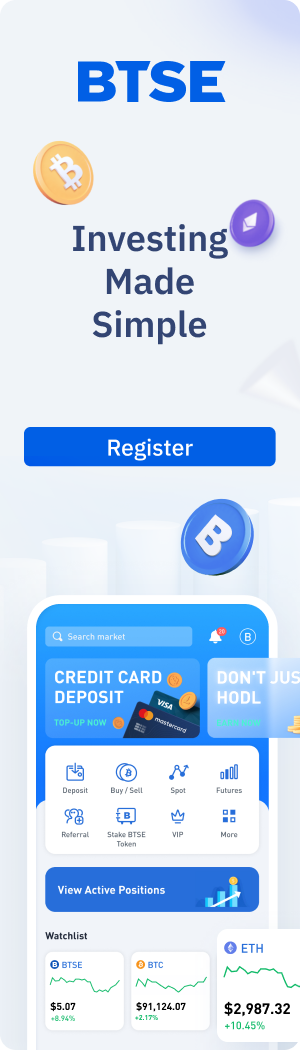
BTSE stands out for retail users by effectively bridging the gap between “pro-level” performance and everyday usability. It is designed for the trader who wants institutional-grade security but demands an accessible interface.

Its Retail Advantage
BTSE’s “All-in-One Order Book” is a significant benefit for retail traders; it aggregates liquidity from different trading pairs, meaning you get better pricing and fewer “gaps” in the order book, even on smaller trade sizes.
For those looking to grow their portfolio, BTSE’s Earn and Staking products offer higher yields than competitors.

Why It’s Right for You
- Intuitive Interface: The platform avoids the “spaghetti” UI common in older exchanges, making it easy to navigate from spot trading to yield generation.
- Asset Flexibility: Seamless conversion between fiat and crypto ensures that your transition from traditional banking to the digital asset world is frictionless.
- Security First: With powerful storage protocols and a track record of transparency, it provides the peace of mind necessary for individual asset management.
The “Trade-off” Reality
Because BTSE offers so many “pro” tools (like advanced AutoTrader and futures options), it can feel overwhelming for a complete beginner. However, once you learn to utilize the basic BTSE spot trading interface, the learning curve flattens significantly.
2. Binance: The Comprehensive “Super-App”
Binance remains the retail titan, primarily due to its sheer scale. For the retail trader, “Binance” is less of an exchange and more of an all-encompassing financial super-app.

The Retail Advantage
The breadth of assets on Binance is unparalleled. If you are interested in exploring the “long tail” of crypto—smaller-cap coins or niche tokens—this is where you will find them.
Their “Learn and Earn” programs are also among the best in the industry for educating new entrants on how blockchain protocols actually function.
Why It’s Right for You
- Unmatched Liquidity: You can exit almost any position instantly, regardless of market volatility.
- Educational Depth: Extensive support content makes it the best place for a beginner to start their journey.
- Mobile-First Experience: Their app is widely considered the gold standard for mobile trading, allowing you to manage your portfolio anywhere.
The “Trade-off” Reality
Its size is also its greatest weakness for some. The sheer number of features can lead to a cluttered user experience. For a simple investor who just wants to “buy and hold,” the constant barrage of notifications and new product launches can be a distraction.
3. OKX: The Web3 Powerhouse The Gateway to Professional Options
OKX has positioned itself as the definitive bridge between centralized exchange convenience and the decentralized Web3 world. For the retail trader who wants more than just spot trading—someone who wants to explore DeFi, NFTs, and copy trading—OKX is a premier choice.

The Retail Advantage
OKX integrates a self-custodial Web3 wallet directly into its app. This allows you to interact with DeFi protocols, swap tokens on decentralized exchanges, and manage your NFT portfolio without leaving the OKX interface. It effectively combines the speed of a CEX with the self-sovereign control of a DEX.
Why It’s Right for You
- Unified Ecosystem: You don’t need multiple apps to handle different parts of your crypto journey; the OKX app houses your exchange account and your private wallet.
- Copy Trading: Their social trading features are highly developed, allowing retail users to mirror the strategies of successful, vetted traders.
- Advanced Automation: For those moving beyond basic buying and selling, OKX provides easy-to-configure trading bots (grid, DCA) that automate your strategy.
The “Trade-off” Reality
OKX is feature-dense. While the interface is clean, the sheer variety of products (DeFi, Web3, derivatives, and spot) may mean new users need some time to orient themselves. It is a “power-user” retail platform.
Comparative Retail Matrix
The following table compares these exchanges based on the metrics that matter most to the individual investor.
Feature |
BTSE |
Binance |
OKX |
Ease of Use |
High (User-Focused) |
Moderate (Complexity) |
Moderate (Feature-Dense) |
Passive Income |
Excellent (Earn/Stake) |
Good (Diverse) |
High (DeFi/Staking) |
Mobile Access |
Very Good |
Industry Best |
Excellent |
Primary Retail Use |
Investing/Staking |
Everything Store |
Web3/DeFi/Copy Trading |
Best For |
The Serious Investor |
The Explorer |
The Web3/DeFi Enthusiast |
Conclusion: Empowering Your Portfolio
For the average retail investor in 2026, the exchange you pick will dictate your daily trading experience. You do not need the fastest server in the world, but you do need an exchange that keeps your assets safe, your interface clean, and your growth potential high.
If you are looking for an “All-in-One” solution that balances ease of use with the capability to perform advanced strategies as you grow, BTSE is your best entry point.
Ready to get started?
- Create your account on BTSE and explore the earning ecosystem.
- Check out articles in BTSE’s Support Center to master your first trade.
Choose the platform that grows with you, not just the one that is trending.